A HAPTIC ATLAS OF THE MATERIAL AND SENSUOUS BIOREGION
making an atlas
A Haptic Atlas of the Material and Sensuous Bioregion maps other ontologies, integrating craft, ecology, and culture in a tactile and hopeful response to the urgent question How do we live well in the world?
A Haptic Atlas is a stubbornly poetic yet practical research-creation (Loveless, 2019), asking us to entangle ourselves in a direct knowing of ecological, social, material, economic, and creative ways of being. It maps complex systems, relationships, and forms of knowledge that weave our experience of being alive in this world, in the here-now.
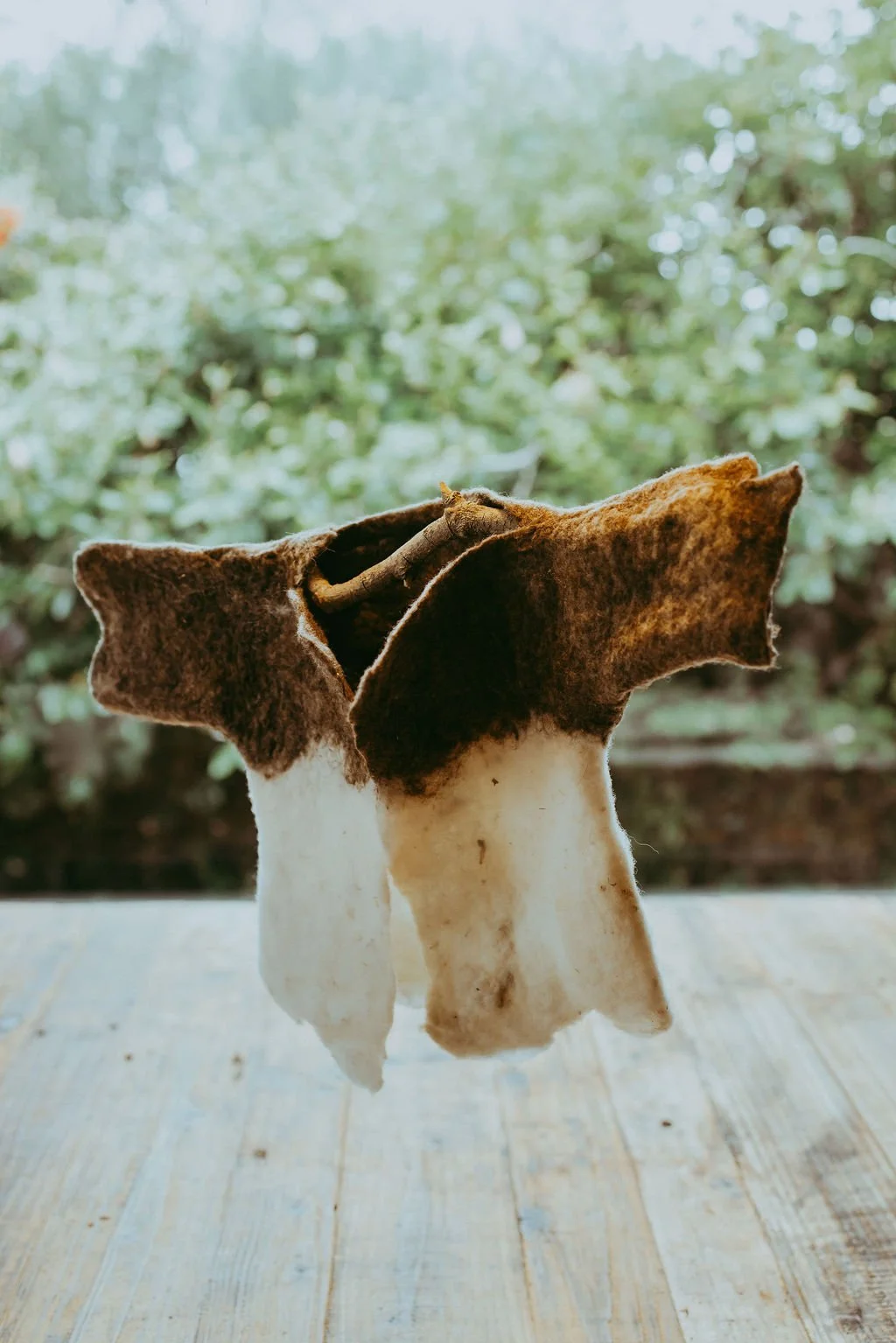
The Atlas currently manifests as a carrier bag that presents as a website, a material artefact that presents as a Not-Coat, oral and written text and social happenings that present as a curriculum, and a visual lexicon that presents as a short film and photo essays. All are ways of paying attention. A Haptic Atlas is a shape shifter, a plenitude that elicits behavior change and encourages alternative world-building. It is a compendium of landscapes through which the traveler (re)discovers the terrains of self and world. An Atlas reflects bone wisdom: our collective instinct toward hope, creation, and connection in a world in rupture, at risk of collapse (UK Gov, 2026; Carrington, 2025; Diamond, 2005; Richardson et al, 2023; Bendell, 2018). It traces a regenerative ontology through practice, material, process, the more-than-human, and what is life-generating. It insists on delight.
methods
situated practice
craft practice
[auto]-ethnography research-creation
Maps are magical, revealing landscapes unseen, revealing places one might go. They are entangled with the perceptions and priorities and limitations of the mapmaker. What is mapped and what is not mapped is filtered, situational, subjective. A map suggests firmness and completeness of a world that doesn't come into being until you arrive. In this sense, a territory, a landscape, is always experienced in relationship to you: you make the map, you make the world.
Applying place-based research, auto-ethnography, and creative practice, the Atlas weaves Andreas Weber's theory of Enlivenment (Weber, 2019) with Gideon Kossoff's concept of Cosmopolitan Localism (Kossoff, 2024), echoes Rob Hopkins' insistence that we can make futures we want to live in (Hopkins, 2026), and embraces Rebecca Solnit's admonition to practice a muscled hope (Solnit, 2025), weaving all into a story-map of living otherwise (Haraway, 2017).
An Atlas is a vehicle of becoming, a wayfinding tool: the routes we take and the things we discover come into being as we navigate through its landscapes. As an atlas, it contains many maps; being haptic, it encompasses both touch and response. It is vibrant tactility.
An Atlas demands an embodied and active presence in order to both experience and enact it: we are asked to write new stories, discover our agency, practice courage, and embrace our deep enchantment with the human and more-than-human worlds.
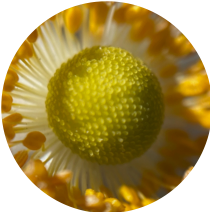
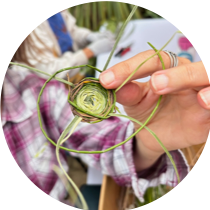
A Haptic Atlas may appear in these guises: foraging as discernment, making as revelation, mapping as rediscovery, walking as ritual, photography as contemplation, moving image as wonderment, narrative as stillness. It may appear as a bee alighting on a flower.
Could we dare to dream of a future world in this one? Not as science fiction or fantasy, but as tangible, real-life happenings that celebrate new ways of living, dwelling, and thinking?The Haptic Atlas is a map to other ontologies, a wayfinding tool, guide, and curriculum that navigates through material, process, reflection, gathering, and observation. These thresholds are a way of orienting oneself to the world and the work. They show us the lay of the landscape, not directions.Each artefact, web page, social intervention, image, or project is an independent narrative, yet considered together form a way of re-orienting one’s self to the world, asking new questions, and creating new futures. The Atlas you experience here is a practice in progress, and is “a” haptic atlas, my haptic atlas. I encourage you to create your own.In the words of Bayo Akomolafe, in an online chat with Paul Hawken for the Schumacher Center, the foundational confusion is “based on the supposition that we know where we are and know where we’re going.”
Our central challenge, then, is to realize we need a paradigm shift: we’re living in a story that can no longer pretend to work, and hasn’t worked for a great many people for a great long time.
*”We can’t get there from here: Carbon, Climate, and the Call to Wonder.” The Schumacher Center, with Paul Hawken and Bayo Akomolafe
to map a journey; begin wherever you find yourself.
THRESHOLDS
ARTEFACTS
craft
making
embodied practice
community (place)
WEBSITE
technology
carrier bag
community (relations)
systems thinking
CURRICULUM
embodied knowing
teaching and learning
sharing
workshops
papers & talks


VISUAL LEXICON
video and photo essays
observation
wonderment
delight (enlivenment)
An Atlas maps here-now and might-yet-be worlds the traveler creates as well as discovers – the terrain exists both within us and within the worlds we co-inhabit. In that sense, an Atlas is a Trickster: it may appear as a social experience, a tactile object, a narrative. One recognizes an Atlas by observing one's environment, and one engages with a Haptic Atlas by making something (touch) and by being affected by something (touched).
As an evocation of the principles of regenerative design, the atlas is likewise fluid and multi-disciplinary. There is no one methodology, no one author, no one time or place or who-what implicated in its making or its activation. An Atlas is accessed through thresholds, liminal spaces of entry, that manifest as multiple, dis-similar objects, knowledge, insight, relations, or delight.
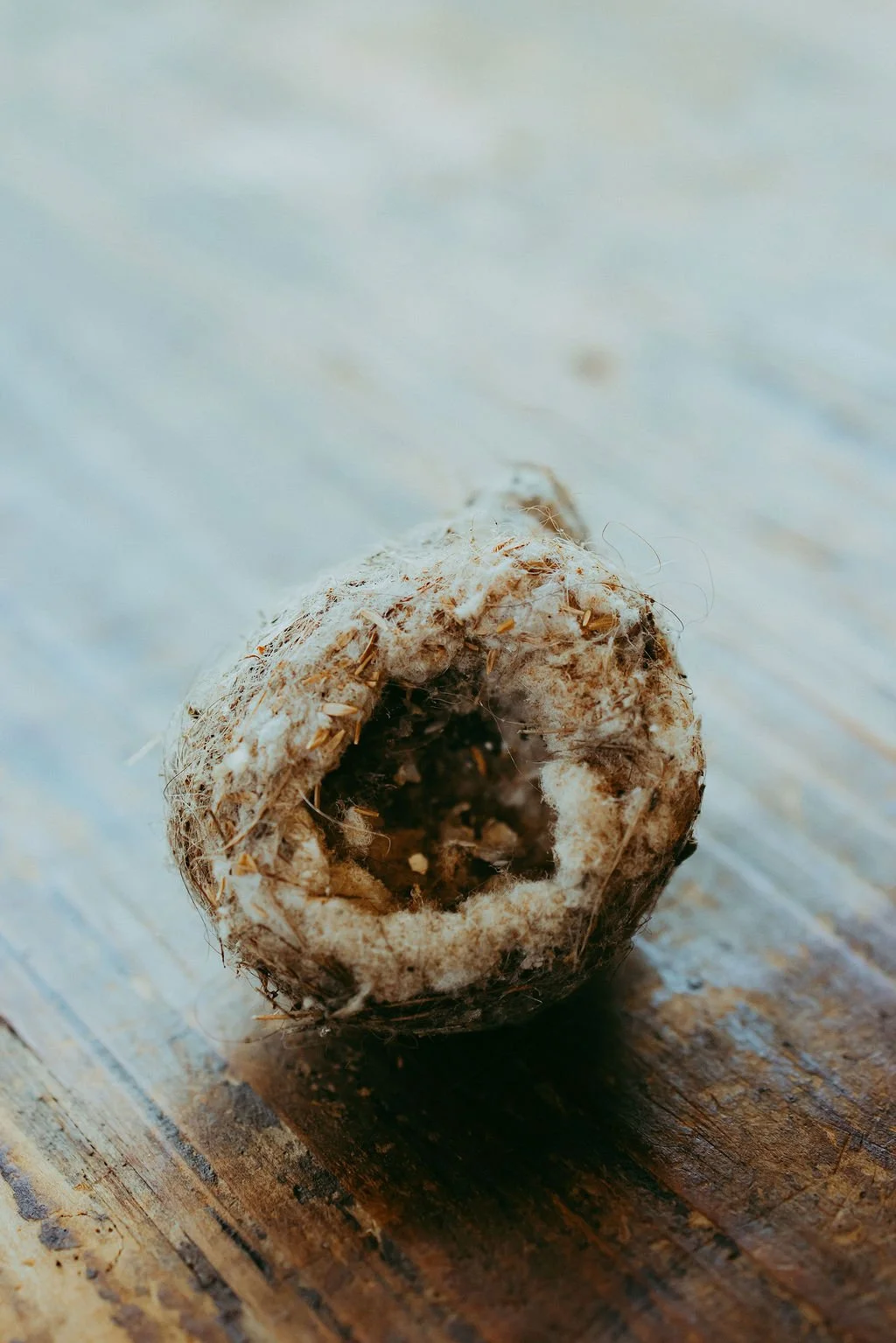
When manifesting as that most modern evocation of Ursula LeGuin's carrier bag theory of fiction, a website, a haptic atlas is a compendium of storytelling. It is how we bring seeds back to the home, or carry cultural narratives forward. This is language play and technology. The liminal space of a website serves as a container of resources, a living archive, woven tech-text, the object that allows even dissimilar ideas and images to co-exist across space and through time. This is also carrier bag as shape shifter, as it lives in the clouds, existing everywhere and yet nowhere, appearing in the here-now yet also cataloging the there-then.
A version of a Haptic Atlas lives inside of this website, as a hybrid archive, carrier bag, and method of distribution, making it more accessible, and offering it a way of manifesting its connectedness and accessibility. You can navigate through this atlas in much the way you would any territory, where you might turn left, or cross a bridge, or take the scenic route: multiple routes to the same destination, or to no place at all. You may build your own haptic atlas.
The atlas contains a glossary of terms - both as a way of setting ground and because language is important to how we understand and make worlds. How we claim the sensuous. It also contains multiple other pages and photo essays, and is intended to be a work in progress.
O
U
T
C
O
M
E
The most subversive thing we can do is exercise hope. Hope is generative, it’s the yes that keeps the action moving forward, the improvisation that keeps story alive. Living well happens in relationship, in thinking larger than ourselves, in learning more about our place in this world and what it asks of us. Taken as a whole, the work allows for a philosophical and practice-led reflection on how regenerative design and this haptic atlas contribute to learning, resilience, and social-ecological renewal.
By design and definition, a Haptic Atlas is fluid and incomplete, always on the edges of an unknowable future. While imagined as an object, a Haptic Atlas is lived as a process (Fletcher, 2016), in a state of unfolding, as Ingold says of materials, "always on the way to becoming something else." (Ingold, 2011) In this becoming, an Atlas is primed for new ways of being. As a map not truly to place but rather to why and how, there is no one methodology, no one author, no one time or place or who-what implicated in its making or its activation.
This fluidity begets its accessibility, viability, and vulnerability. It has the capacity to endure, to evolve with time and conditions, to re-orient through multiple audiences, economic states, and social environments: the university conference, the craft workshop, and the quiet conversation all navigate within an Atlas. It is meant to live within each of us as a way of recognizing possibility. An Atlas is the "instructions and...map buried in our hearts when we enter this world" (Harjo, 2013), the reminder that we have what we seek within us: we are the map, the maps unfold within us. And this is how to live well in the world: to know our belonging, to enact our gifts.
REFERENCES
Bendell, J. (2018). Deep adaptation: A map for navigating climate tragedy. London. Institute of Leadership and Sustainability.
Berger, J., & Mohr, J. (1975). A seventh man: A book of images and words about the experience of migrant workers in Europe. Penguin Books.
Carrington, D. (2025). ‘Self-termination is most likely’: the history and future of societal collapse’, The Guardian 2 Aug. Available at: https://www.theguardian.com/environment/ 2025/aug/02/self-termination- history-and-future-of-societal-collapse (Accessed: 6 June 2026).
Dahlstrom, D. (2021) ‘World (Welt)’, in M.A. Wrathall (ed.) The Cambridge Heidegger Lexicon. Cambridge: Cambridge University Press, pp. 822–829.
Diamond, J. (2005). Collapse: How societies choose to fail or succeed. doi.org/10.2307/40184705.
Fibershed (n.d.). Available at: https://fibershed.org/ (Accessed: 10 March 2026).
Fletcher, K. (2016). Craft of use: post-growth fashion. Available at: https://katefletcher.com/ publications/books/craft-of-use-post-growth-fashion/ (Accessed: 4 April 2026).
Harjo, J. (2013). Crazy brave: A memoir (First edition). W.W. Norton & Company.
Hopkins, R. (2025). How to fall in love with the future: A time traveller's guide to changing the world. Chelsea Green Publishing
Icarus films: Donna Haraway. (2017). Retrieved November 15, 2025, from https://icarusfilms.com/if-donna
Ingold, Tim. (2011). Being Alive. Essays on movement, knowledge and description. Oxon, UK: Routledge.
Kossoff, G. (2024). Embracing an ecological worldview and cosmopolitan localism for sustainable transitions toward more equitable futures. Cuadernos Del Centro de Estudios de Diseño y Comunicación, (222). doi.org/10.18682/cdc.vi222.11201
Le Guin, U. K. (1997). Dancing at the edge of the world: Thoughts on words, women, places. Grove.
Loveless, N. (2019) How to make art at the end of the world: a manifesto for research-creation. Durham: Duke University Press.
Merleau-Ponty, M. (2013). Phenomenology of perception (0 ed.). London: Routledge. doi.org/10.4324/9780203720714
Nye, N.S. (1995), Kindness, Words under the words: selected poems. Portland, Oregon: Eighth Mountain Press.
Planetary Imaginaries by Liam Young (2026). [Exhibition]. SCI-ARC Gallery, Los Angeles. 30 January 2026 – 08 March 2026.
Richardson, K., et al. (2023). Earth beyond six of nine planetary boundaries. Science Advances. doi.org/ 9. 10.1126/sciadv.adh2458
Solnit, R. (2025) No straight road takes you there: essays for uneven terrain. Chicago, Illinois: Haymarket Books.
Weber, A. (2019) Enlivenment: toward a poetics for the Anthropocene. Cambridge: MIT Press
UK Gov (2026). Available at: https://www.gov.uk/government/publications/nature- security-assessment-on-global-biodiversity-loss-ecosystem-collapse-and-national- security (Accessed: 23 April 2026).
Wheatley, M. (2024). ‘Margaret Wheatley - An episode on civilization collapse (warning: truly confronting.)’ Interviewed by Sarah Wilson. Wild with Sarah Wilson. 30 July. Available at: https://shows.acast.com/wild-with-sarah-wilson/episodes/collapse- series-meg-wheatley (Accessed: 15 March 2026).