A HAPTIC ATLAS OF THE MATERIAL AND SENSUOUS BIOREGION
Yard Work: a situated intervention in plants, place, and craft.
Yard Work
Yard Work is a place-based making event and community dialogue that invites participants to reconsider their relationship to the ground beneath their feet — the plants, soils, histories, and ruptures that constitute the neighborhood as a living system. Set on a sidewalk in West Los Angeles, it operates at the scale of the block: unhurried, material, and open to whomever passes.
What is a Yard?
A yard, in common North American usage, is the patch of grass surrounding a house. The word itself carries older meanings, and its use in this context is deliberate — it is also a place where work is done: shipyard, lumberyard, dockyard. In Los Angeles, a yard was often a kitchen garden large enough to feed a family, a remnant of the rancho and farmstead systems that made LA County the most agriculturally productive land in the United States as recently as the 1940s. Sometime between the post-WWII population boom and the explosive growth of supermarket chains, we lost both the practice and the word. The yard became a lawn, and the lawn became a site of maintenance (usually performed by someone else). Yard Work begins with that hollowed out word — and the hollow relationship to land it names.
Yard Work becomes an ontology.
“I could weed that for you.”
“I could put in gravel for you.”
Who is a yard for? The neighbor’s aesthetic pleasure? A site so degraded of life-supporting plants and soil that it becomes effortless, no longer requiring maintenance, and therefore becomes death-giving?
Ruptures as thresholds
The project draws on a growing body of practice-based research linking craft, ecology, and place. Gideon Kossoff's framework of Cosmopolitan Localism — the idea that resilient futures are built through deep, reciprocal engagement with the immediate and particular — shapes the underlying approach. Yard Work treats the neighborhood not as backdrop but as primary text: a site of inquiry, a source of materials, and a collaborator in its own understanding.
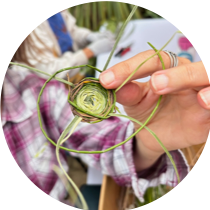
The intervention is simple by design. On a weekend morning, the researcher sets up a table, two chairs, and a basket of foraged plant materials — cordage twisted from day lilies, dandelion stems, leaves gleaned from wildflowers and natives. She works with her hands. Neighbors stop. Conversation begins.
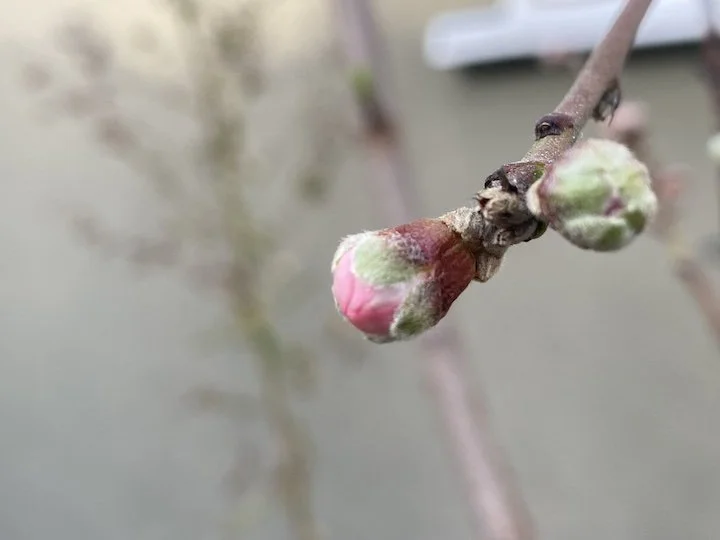
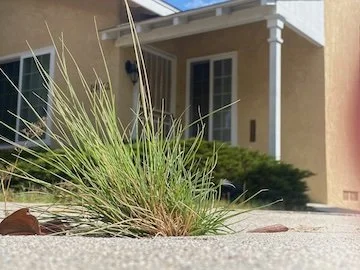
The neighborhood holds its ruptures close. The concrete-lined Ballona Creek, diverted in the 1940s. Peach trees blooming early, confused by a 90-degree January heat wave. The 405 Freeway, which bisected streets and left at least one home stranded on an island of asphalt. The Kuruvungna Springs — a native Tongva site and the last natural spring in LA County not encased in concrete, is still contested. Plant life pushing through concrete and asphalt. Ruptures of ecology, infrastructure, language, and memory, all within walking distance. Ruptures, this researcher has found, are also thresholds.
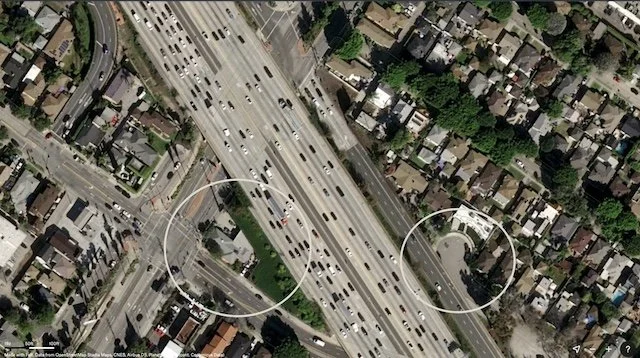
Overhead freeway map created by felt.com
Making as method
The making is both method and metaphor. As the researcher weaves or twists cordage, coils the beginnings of a basket, she invites passersby to touch the materials and trace them back to the yard they came from, the soil that fed them, the history of land use that shaped this neighborhood. Prepared questions open the inquiry: What do you know about the plants in your yard? Have you ever made something with your hands from what grows nearby? What would a life-affirming street look like to you? Do you grow food, or fiber plants, or medicine? Those who linger are invited to make something themselves — a simple coil, a twist of fiber. With consent, their responses enter the research record.
Yard Work is ultimately a practice of noticing together: what grows here, what was here, what could be here — and what small behaviors, tended carefully, might begin to repair the distance between a neighborhood and its ground.
SELECTED RESOURCES
Drought Tolerant Gardens
1
https://www.latimes.com/lifestyle/story/la-timeless/diy-drought-tolerant-garden
You’ll need a subscription to read this, but it’s affirming and inspiring.
What is an eco-social designer?
2
"Eco-social designers challenge the conventional normalised. commodified modes of designing….[and] need to demonstrate how artifacts can engage, activate, and change citizens while reflecting on diverse agencies within a ‘project.’”
As quoted from Alastair Fuad-Luke in Indisciplinary World Re-Making: Artefacts as Exploration, Inquiry, Disturbance, Re-Orientation and Action, printed in Traversing Territories
Why situate this practice on the sidewalk?
3
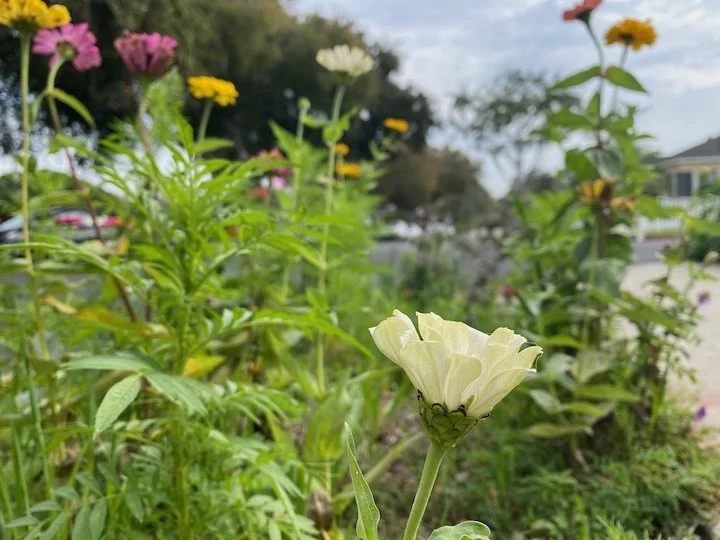
The researcher’s yard has been planted as part native, part drought tolerant, part inspired by regenerative agriculture – with oats, hairy vetch, red clover, sweet pea, and radish to facilitate soil health. Spent plants are left to cover the soil and retain moisture, rather than purchasing processed (chemically suspect?) mulch, or installing weed barrier. People often ask if they can help “weed” or “put down gravel” for me. Very few people can see how much the soil has improved, how little water I use, or the abundant animal life that thrives in my yard. My intent is to bring these practices home, to have these conversations where the intervention is happening.
“How can we make the forest exist within us, within our homes, within our yards?”
4
This is a question posed by Ailton Krenak in his altogether extraordinary treatise Ancestral Future (page 37). I ask you the same question. Can you be brave enough to remember your wildness, and invite the forest into your yard, into yourself?